

Multi-Brand. Multi-Region. One Platform.
Multi-Store eCommerce Platform
Run multiple storefronts with independent pricing, catalogs, currencies, and themes. From one admin.
Used by over 5K businesses worldwide












Many Stores With One Admin Panel
Whether you’re managing multiple brands, regional sites, or B2C/B2B storefronts under one roof, Spree makes it easy to scale your operations without duplicating infrastructure or effort.
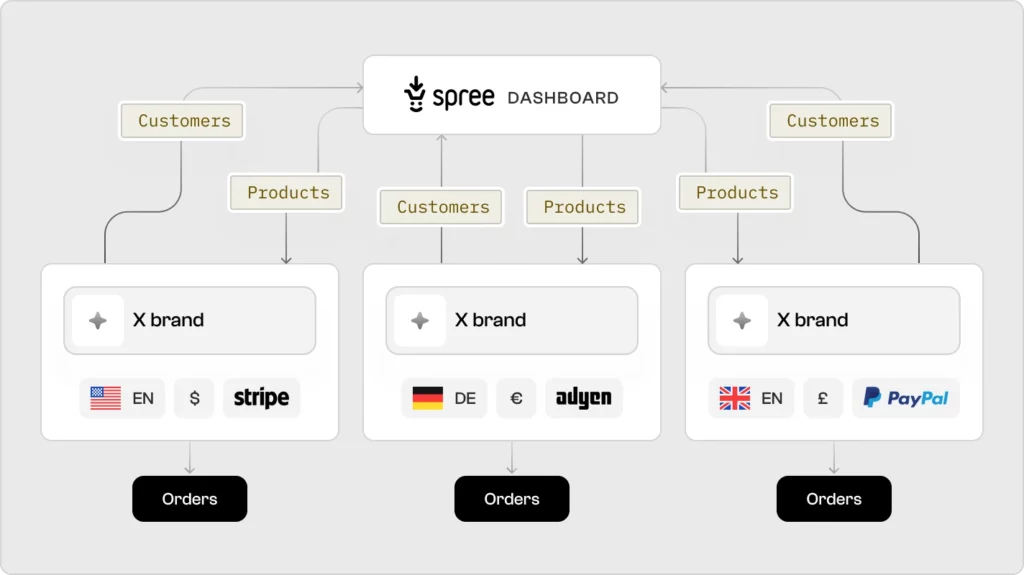

Assign unique domains and brand them individually with separate themes and content.

Store-Specific Payment Options
Share global payment methods or allow store-specific Stripe, PayPal, or other integrations.

Shipping & Fulfillment Configs
Define store-level shipping zones, carriers, and fulfillment logic.
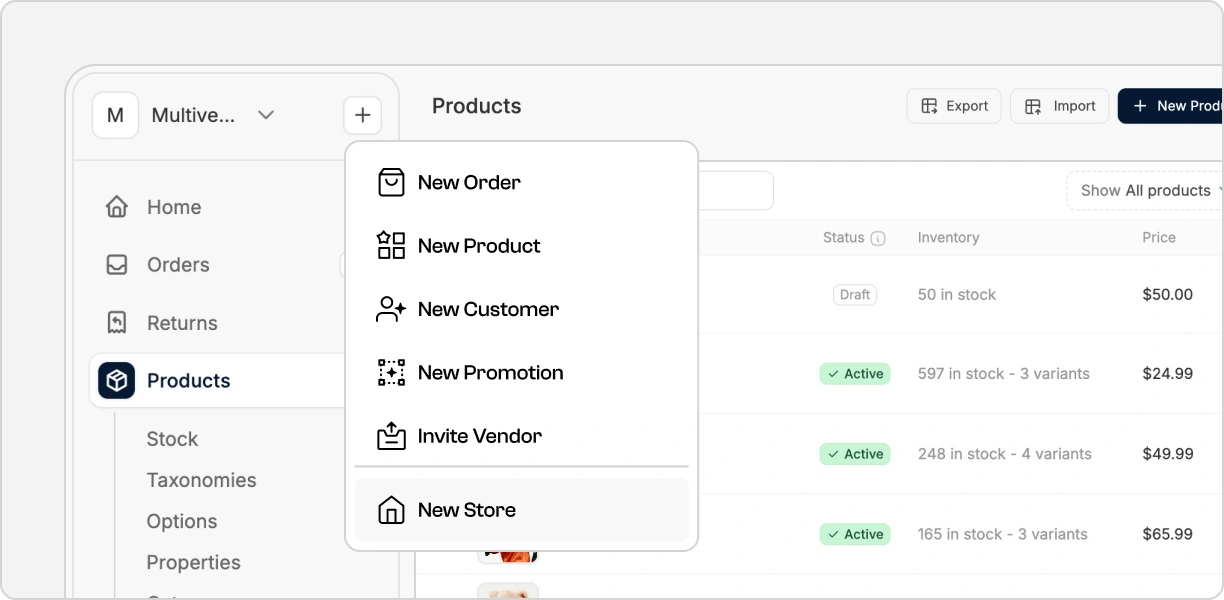
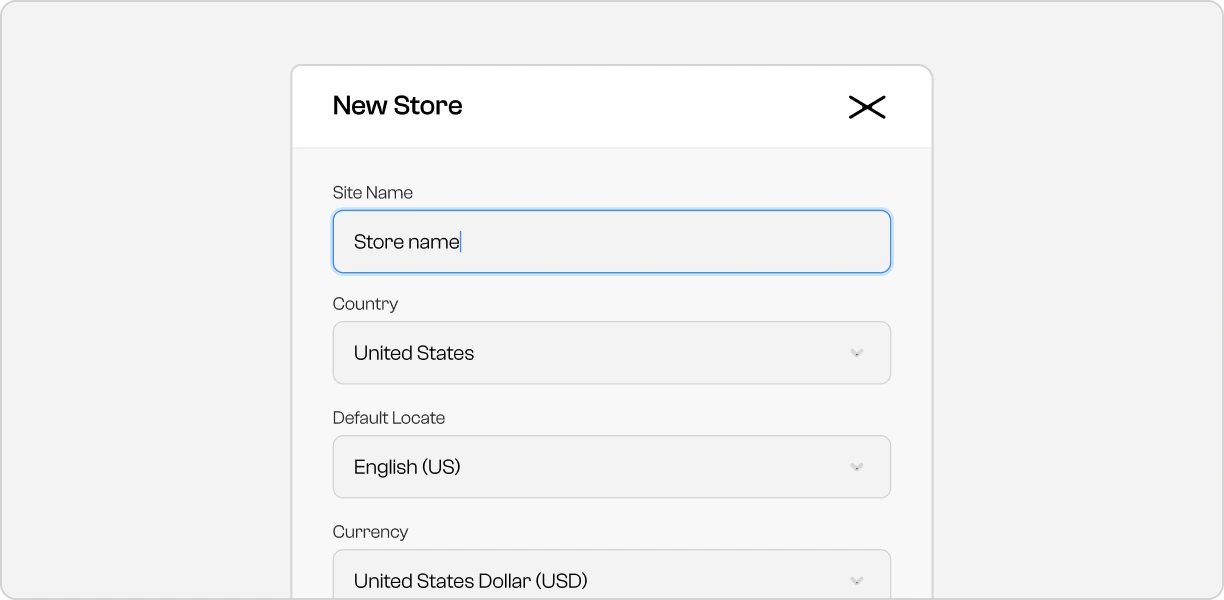
Create and configure new stores in seconds, choosing what to share or isolate (e.g., products, customers, payment methods).
Price Lists & Customer Pricing
Set per-store and per-market pricing rules. Volume discounts, wholesale rates, and customer-specific prices, all managed from one admin.

Define per-country storefronts with local currencies, languages, tax rules, and shipping methods using Markets. A Translations Center lets you bulk import and export product translations across multiple languages.

Configure analytics tools, pixels, or marketing services separately for each store to support unique brand or regional needs.

Track performance per store with individual dashboards or unified multi-store reporting.

Tailor themes, messaging, catalogs, and promotions to each brand or region. Use Customer Segments for targeted pricing per storefront.
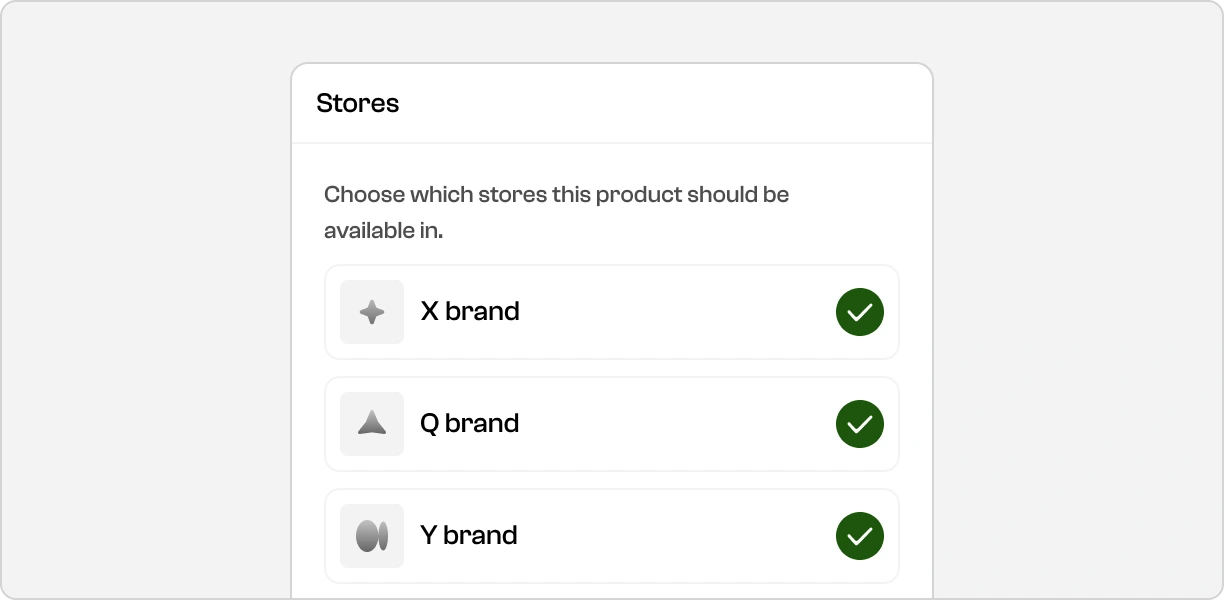
Share a master catalog across storefronts or give each store control over its own products and inventory. Ideal for multi-brand operators managing different product lines from one admin.

Carts and checkouts are kept separate per store.

Saved Customer Payment Methods
Users can reuse payment methods across stores, providing a frictionless checkout experience for returning customers.

Orders, returns, refunds, and shipments are store-specific by default.

Each store has its own CMS pages, blogs, and metadata configuration.
Build Multi-Store Commerce Your Way
Whether you run multiple brands from one dashboard, expand into new markets with localized storefronts, or split B2B and B2C operations on one multi store ecommerce platform, Spree gives you the control to grow without duplicating infrastructure.

What you get
Multi-Store eCommerce Platform
Spree’s multi-store architecture lets you launch new brand storefronts, enter new markets with localized pricing and currencies, or run B2B and B2C operations side by side. Open source. No platform fees. Full REST API for any frontend.

A multi-store platform
Each store gets its own domain, theme, catalog, pricing, and checkout. You control what to share and what to isolate across your entire multi store ecommerce platform.
Free improvements
Spree is open source. Every release brings new capabilities you can adopt on your own schedule. No vendor lock-in, no forced migrations.
Support available
Enterprise support, managed hosting, and implementation services for teams scaling multi-store operations.
Success stories




Frequently Asked Questions
What is a multi store ecommerce platform?
A multi store ecommerce platform runs multiple branded storefronts from a single backend. Each store has its own product catalog, pricing, checkout flow, and domain while sharing one admin panel, one codebase, and one set of integrations. Spree Commerce includes multi-store as a core capability in its Community Edition, so operators serve every brand, region, or business unit from the same deployment without per-store licensing.
How do you manage multiple online stores from one platform?
Through a centralized admin that gives you visibility across all stores while letting you configure each one independently. You set store-specific catalogs, pricing rules, payment providers, and shipping methods without duplicating your product data or integrations. Spree Commerce scopes every setting to individual stores, so changes to one storefront never affect another.
Can a multi store ecommerce platform handle different currencies and languages?
Yes. Cross-border multi-store setups need per-market currencies, localized product content, and region-specific payment methods. Spree Commerce uses Markets to define these rules per storefront: each market gets its own currency, language, tax configuration, and shipping zones. A Translations Center supports bulk import and export for product translations across multiple languages.
What is the difference between multi-store and multi-vendor ecommerce?
Multi-store means one company operates multiple branded storefronts, each with its own catalog and checkout. Multi-vendor (marketplace) means multiple independent sellers list products on a single storefront, with the platform handling payments and commission splitting. Spree Commerce supports both models from one codebase: multi-store is a Community Edition capability for brand portfolios; the Marketplace module layers multi-vendor cart, vendor dashboards, and commission management on top.
How does multi storefront ecommerce work for franchise networks?
Franchise networks need per-location storefronts with localized inventory, pricing, and branding, all governed by corporate standards. A multi store ecommerce platform gives each franchise its own storefront and admin access while the parent organization controls shared catalogs, promotions, and brand guidelines centrally. Spree Commerce supports per-store configuration with shared product data and independent checkout flows.
Can you run B2B and B2C stores on one multi store ecommerce platform?
Yes. Spree Commerce runs B2B and B2C as separate stores within the same instance. The B2B store uses buyer organizations, approval workflows, customer-specific price lists, and gated catalogs. The B2C store runs a standard consumer checkout. Both share the same product database and admin panel, so your team manages inventory, promotions, and fulfillment from one place.
What should you look for when choosing a multi store ecommerce platform?
Evaluate per-store independence (separate catalogs, pricing, domains), cross-border support (multi-currency, multi-language), and the pricing model (per-store fees add up fast on SaaS platforms). Check whether multi-store is a native capability or a plugin, since plugins often break during platform updates. Spree Commerce includes multi-store as a native Community Edition capability with no per-storefront fee, so operators add storefronts without the licensing ceiling.